I chose to write this poem because I wanted to pledge my devotion to Frederick Douglass' heroic life. Also, he inspired me because he accomplished more than i did when he was my age. Last, because of the events that settled in his life, I understand I will not be able to achieve what I want if I do not fight.
He was before Dr. King had his dream
The beginning of Frederick Douglass started in 1818
It was like an embryo developed in a cage
Because young Frederick was born a slave
He did not have his mom Harriet Bailey as he rose older
And would not have any success with his white father
While a boy he saw things as a man
Working on plantations in Tuckahoe, Maryland
It was not like now as a kid getting your way using your charm
He would have a better chance singing a sentiment with the Great House Farm
An Irishman had been affected by his slave life
But I would have never showed him pitty because he taught his self how to read and write
When he lost control he showed me he was strong
He defeated his overseer and did not care if he was wrong
When he recieved his freedom he acceted it as he was about to died
Hiding his trials of his triump escape to freedom from his audience was not nearly effective as 1895
Maurice J.
Wednesday, April 9, 2008

Tuesday, April 8, 2008
To whom it may concern,
I have finally reached my aspiration of becoming a free man. I have accomplished the unthinkable. I have opened a door to all of my enslaved brothers and sisters and for that I am proud. I am proud to be an example that all men/women are created equal and we have the same rights as anyone else to be free. I know that in the pass I have stated that in the free state that I have been sad and felt lonely, I was just saying that because I was still obscured about the next step to take and what tomorrow might bring me. I have learned that my life and your life has meaning. Taking that life-threatening journey to freedom was only the beginning and the next step is to help others feel the joy that I feel when I wake up everyday knowing that I am free. That I will work all day long and at the end of the day be able to have all the profit. I am a very strong believer in the equality of all people wether black, female, or Native American. If they have the right to be able to read, write, etc then why shouldn’t we be able to? The answer to that question is that we should and can have the ability to do the same things as them. We have to stand up and fight for what is ours..." no guts no glory". I will fight with anyone that wants to do something right for a change but I will pass on the opportunity to make matters worse. Life after slavery might not be what I imagined it to be but it’s a better life then that of being chained and beat for no reason and not being able to fight back. The life of being a slave is no life at all, they think that what they are doing is the right thing and go to church every Sunday and call themselves Christians. After all this is said and done I will continue to encourage and help people have a life of freedom, if I have to die trying.... "Without struggle, there is no progress". By Dameda M
I have finally reached my aspiration of becoming a free man. I have accomplished the unthinkable. I have opened a door to all of my enslaved brothers and sisters and for that I am proud. I am proud to be an example that all men/women are created equal and we have the same rights as anyone else to be free. I know that in the pass I have stated that in the free state that I have been sad and felt lonely, I was just saying that because I was still obscured about the next step to take and what tomorrow might bring me. I have learned that my life and your life has meaning. Taking that life-threatening journey to freedom was only the beginning and the next step is to help others feel the joy that I feel when I wake up everyday knowing that I am free. That I will work all day long and at the end of the day be able to have all the profit. I am a very strong believer in the equality of all people wether black, female, or Native American. If they have the right to be able to read, write, etc then why shouldn’t we be able to? The answer to that question is that we should and can have the ability to do the same things as them. We have to stand up and fight for what is ours..." no guts no glory". I will fight with anyone that wants to do something right for a change but I will pass on the opportunity to make matters worse. Life after slavery might not be what I imagined it to be but it’s a better life then that of being chained and beat for no reason and not being able to fight back. The life of being a slave is no life at all, they think that what they are doing is the right thing and go to church every Sunday and call themselves Christians. After all this is said and done I will continue to encourage and help people have a life of freedom, if I have to die trying.... "Without struggle, there is no progress". By Dameda M


Friday, April 4, 2008
Charles Madison I've decided to draw a picture

Fredrick Douglas
The reason Why I have chosen to draw this picture of Colonel Lloyd’s Plantation,
Because It made me realize some things in life and how it was back then. It showed to me
that back then it wasn’t a easy life thing were hard and slaves were treated non-human
like. This is also a sad picture because it has pictures of the slaves working in the
plantations while there master has a gun watching them. I think that this picture inspired
me because it shows me how well I got it in life.
The reason Why I have chosen to draw this picture of Colonel Lloyd’s Plantation,
Because It made me realize some things in life and how it was back then. It showed to me
that back then it wasn’t a easy life thing were hard and slaves were treated non-human
like. This is also a sad picture because it has pictures of the slaves working in the
plantations while there master has a gun watching them. I think that this picture inspired
me because it shows me how well I got it in life.
Thursday, April 3, 2008
Jasmine's Creative Response
I've decided to do a collage of this scene of Frederick Douglass because this is the climax of this narrative. It was the turning point in his life when he decided that he wanted to be a free man and no longer a slave. He wants to be his own man. He wanted to learn how to read and write, and to escape slavery to become a sucessful African-American man who have made a great contribution to this world, though he had came a long way. This is what inpried me to do this collage, and I know that this book on Frederick Douglass will help me in the future in college.
Jasmine J.
Jasmine J.
Frederick Douglass


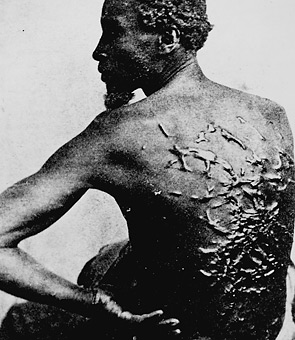


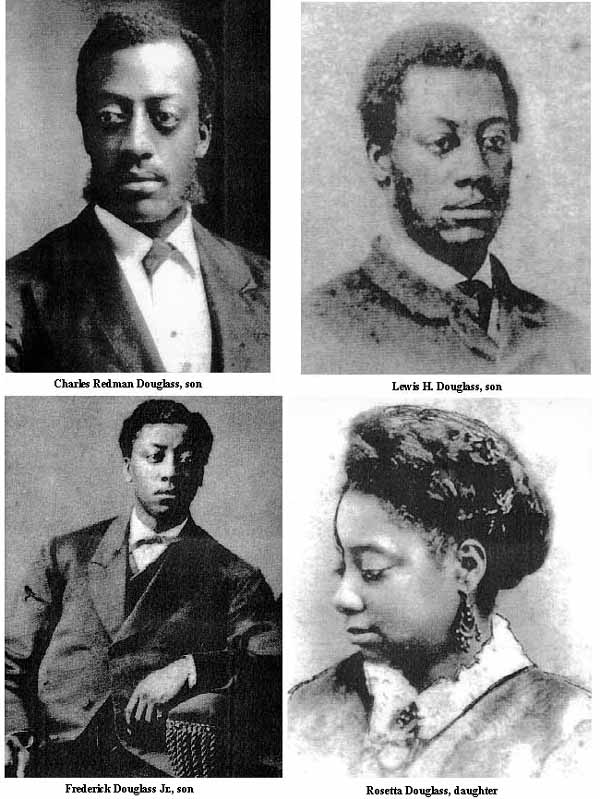


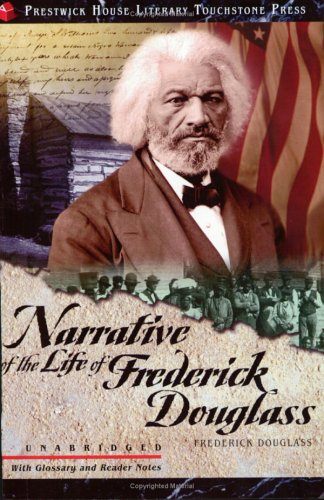
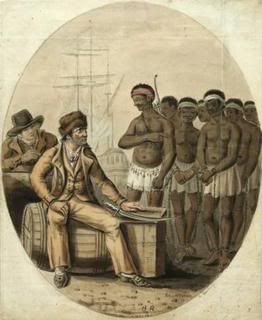
I chose to do the collage for the Fredrick Douglass book because I wanted to see more about what slavery was like and view all the horrifying experiences they went through. After reading Douglass’ book, it made me feel a lot more feelings for all the slaves and what they went through in there lifetimes. I learned from creating this collage that the slaves were not even treated as human beings but were treated as if they didn’t even exist on this earth.
Danny B. 10C
Tuesday, March 25, 2008
Response Question: "A Degree of Freedom"
At the very end of the book, Douglass describes that he began to feel "a degree of freedom" when he startred to speak publicly in front of white audiences. Why did this act have this effect (considering he was already a "free man"?)
Response Question: hidden path to freedom (103-end)
At the beginning of Chapter IX, Douglass chooses not to give the full details of his successful escape from slavery. Why doesn't he give the full details of his escape? What is his opinion of people who do? Most importantly: do you agre with his decision to withhold information? Why or why not?
The Lady of the Lake
According to Wikipedia,
"The Lady of the Lake is a narrative poem by Sir Walter Scott, first published in 1810. Set in the Trossachs region of Scotland, it comprises six cantos, each of which concerns the action of a single day.[1] The poem has three main plots: the contest among three men, Roderick Dhu, James Fitz-James, and Malcolm Graeme, to win the love of Ellen Douglas; the feud and reconciliation of King James V of Scotland and James Douglas; and a war between the lowland Scots (led by James V) and the highland clans (led by Roderick Dhu of Clan Alpine). The poem was tremendously influential in the nineteenth century, and did much to inspire the Highland Revival. By the late twentieth century, however, the poem was virtually forgotten.
It shares its name with the Arthurian character the Lady of the Lake, but other allusions to the legend are scant."
This is not a response question, but make sure you know why I am posting this material!
"The Lady of the Lake is a narrative poem by Sir Walter Scott, first published in 1810. Set in the Trossachs region of Scotland, it comprises six cantos, each of which concerns the action of a single day.[1] The poem has three main plots: the contest among three men, Roderick Dhu, James Fitz-James, and Malcolm Graeme, to win the love of Ellen Douglas; the feud and reconciliation of King James V of Scotland and James Douglas; and a war between the lowland Scots (led by James V) and the highland clans (led by Roderick Dhu of Clan Alpine). The poem was tremendously influential in the nineteenth century, and did much to inspire the Highland Revival. By the late twentieth century, however, the poem was virtually forgotten.
It shares its name with the Arthurian character the Lady of the Lake, but other allusions to the legend are scant."
This is not a response question, but make sure you know why I am posting this material!
Response Question: Loneliness (103-124)
On page 109, Douglass describes an overwhelming sense of loneliness once he is living in a free state. What are some of the reasons he would feel this way? What advice would you give Douglass -- or any recently freed slave -- to overcome such loneliness?
Sunday, March 16, 2008
Respone Question: the "turning point" (69-103)
Douglass describes his battle with Mr. Covey as the "turning point" in his life as a slave. How does the fight transform Douglass' thinking?
Have you ever been through a life-changing experience like this? What happened, and how were you different afterwards?
Have you ever been through a life-changing experience like this? What happened, and how were you different afterwards?
Response Question: Two Masters (69-103)
In this section of the book, Douglass tells us about two masters he has at different points -- Mr. Covey and Mr. Freeman. Look back at his descriptions of the two men. How do they compare or contrast? Give one example of Douglass' experiences with each master.
Sunday, March 9, 2008
Response Question: Religious slaveholders (41-69)
In Chapter 9, Douglass becomes the property of Captain Auld. Douglass hopes the man's religious devotion will make him kind to his slaves, but it seems to have the opposite effect. How does Captain Auld justify his cruelty towards his slaves? Give a specific example.
In America today, it is unlikely that any Christian would also support slavery. How did Captain Auld -- and many Christian slaveholders -- do this in the past?
In America today, it is unlikely that any Christian would also support slavery. How did Captain Auld -- and many Christian slaveholders -- do this in the past?
Response Question: The power of literacy (41-69)
In Chapter 6, Douglass' master states the following:
"Learning will spoil the best nigger in the world... If you teach that nigger (speaking of myself) how to read, there will be no keeping him... It would make him discontented and unhappy."
What does this quote mean, and why is it true? Give a specific example of Douglass' quest to become literate, and how that changed his view of the world (and his own life in slavery).
"Learning will spoil the best nigger in the world... If you teach that nigger (speaking of myself) how to read, there will be no keeping him... It would make him discontented and unhappy."
What does this quote mean, and why is it true? Give a specific example of Douglass' quest to become literate, and how that changed his view of the world (and his own life in slavery).
Response Question: A lack of justice (41-69)
In Chapter 4, Douglass writes about several situations where masters killed their slaves but never faced criminal prosecution. Describe one of these situations. Why wouldn't arresting or trying these cruel masters have made a difference? What can we infer about a society that wouldn't hold white citizens accountable for what they did to their black slaves?
Wednesday, February 27, 2008
About William Lloyd Garrison

William Lloyd Garrison (1805-1872) was a "prominent American abolitionist, journalist, and social reformer. He is best known as the editor of the radical abolitionist newspaper, The Liberator, and as one of the founders of the American Anti-Slavery Society."
He knew Frederick Douglass well, and wrote the preface for his autobiography (also in your edition of the book).
For more information, visit:
http://en.wikipedia.org/wiki/William_Lloyd_Garrison
About Wendell Phillips

Wendell Phillips (1811-1862) was an "exceptional orator and agitator, advocate and lawyer, writer and debater" who "used these skills to support women's, Native American's, and labor workers' rights, and most influentially, the abolitionist movement."
He knew both Frederick Douglass and William Lloyd Garrison, and wrote a letter in fierce support of Douglass' autobiography, which is in your edition of the book.
For more information, visit:
http://en.wikipedia.org/wiki/Wendell_Phillips
Subscribe to:
Posts (Atom)


